
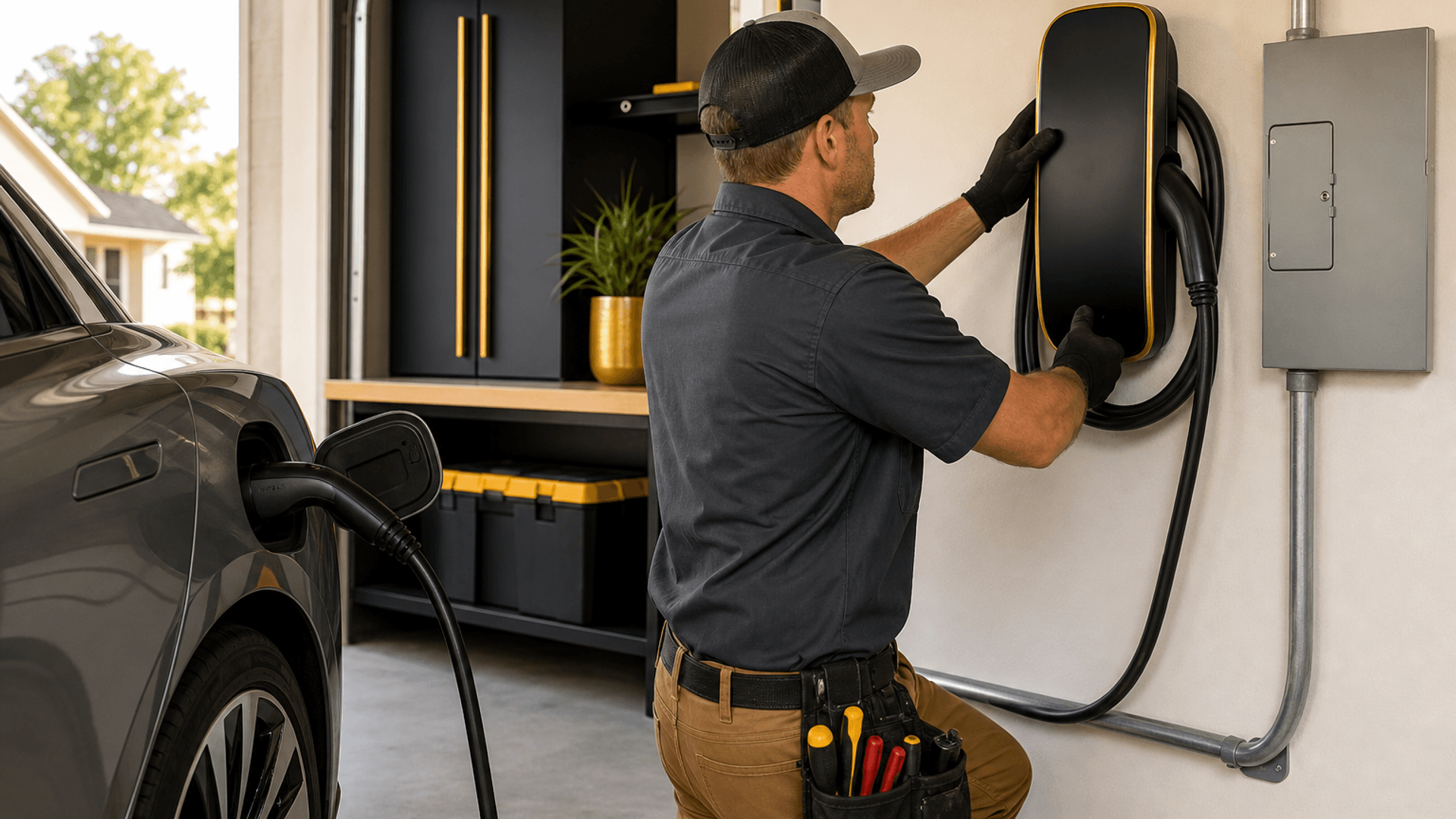
Is Your Home Ready for an EV Charger?
More homeowners around Dothan are picking up electric vehicles, and the first thing most of them learn is that charging on a regular wall outlet is painfully slow. A standard 120-volt plug adds only a few miles of range an hour. A proper Level 2 charger fills most cars overnight. Here's what goes into doing it right.
It needs its own circuit
An EV charger pulls a heavy, continuous load — this is not a job for a borrowed dryer outlet or an extension cord. We run a dedicated 240-volt circuit from the panel to the charger, sized to the unit's rating, so it runs safely every night without stressing the rest of the house.
Your panel has to have room
This is the part people don't expect. If your panel is already near capacity, adding a 40- or 50-amp charging circuit may be more than it can handle. We look at the panel and the charger together, and if there isn't room, we'll talk through a panel upgrade so the whole setup is solid.
Hardwired or plug-in
Some chargers hardwire directly; others plug into a dedicated outlet. Which one is right depends on the unit you bought and where it's going. We'll set it up either way and mount it clean.
Rough it in early
If you're finishing a garage or building, it's worth running the circuit before the walls close up — even if the car comes later. It's far cheaper to do it then than to fish a new circuit afterward.
Thinking about an EV, or already have one and tired of waiting on a slow charge? We'll take a look at your garage and panel and give you a straight price.
Need a hand? Call French's Electric at (334) 479-8713.
Get a free quote →